Review: The Odyssey
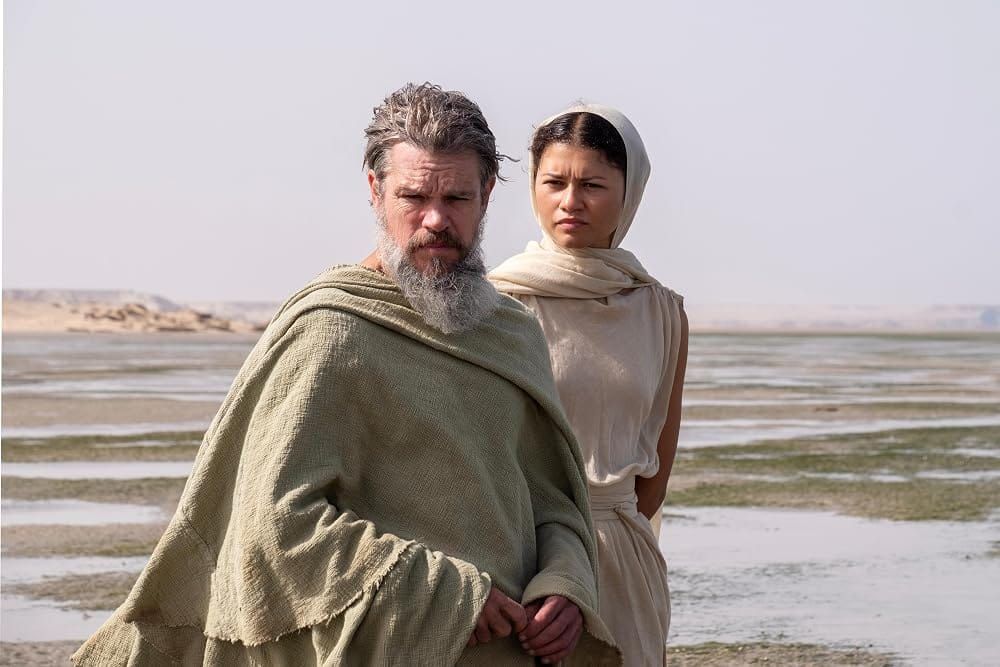
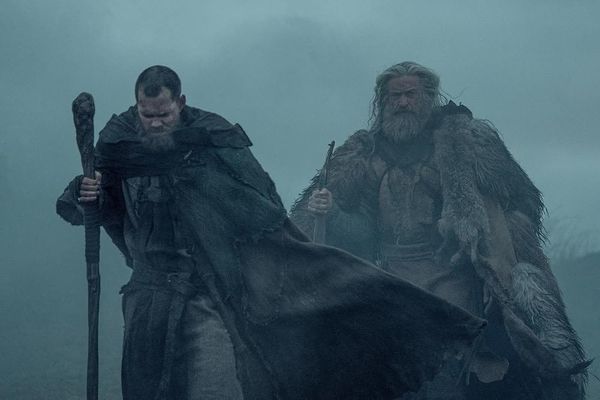
Christopher Nolan‘s The Odyssey is an achievement in grandeur. There have been countless stories inspired by Homer’s epic poem, The Odyssey, ranging from films like O Brother, Where Art Thou? to The SpongeBob SquarePants Movie. Nolan himself, in a 2025 interview with Empire, said, “When you start to break down the text and adapt it, you find that all of these other films – and all the films I’ve worked on – you know, they’re all from the Odyssey.” Nolan’s been making films about men struggling to return home for his whole career, with the most direct example being Interstellar. In adapting the foundational Greek poem, Nolan attempts to tell his biggest story yet. The Odyssey is an epic and loud adventure, but it is also an intimate and profound commentary on humanity’s struggles with agency, fate, and duty.
The Odyssey opens in a crowded palace, amid a feast of unwanted hedonism, greed, and predation. A bard (Travis Scott) tells the story of the missing warrior-king who devised the Trojan Horse. The Trojan War has been over for years now and Ithaca grows weary of awaiting the return of its king, Odysseus (Matt Damon). Penelope (Anne Hathaway), Odysseus’s wife, has stayed loyal to her husband for the entirety of his 20-year absence, but the dozens of suitors are restless for her to choose a new king. With the rumors of a dangerous sea-people attacking along the coast, Penelope is wracked by the tension between her loyalty to her husband and her duty to her people. Ithaca needs a king to defend it, but Penelope needs Odysseus. Odysseus left for the Trojan War shortly after his son Telemachus (Tom Holland) was born, and the young prince yearns to know the man behind countless tales of legendary heroics. Mostly, Telemachus is grieved by his inability to defend himself and his mother against the suitors who dine in Odysseus’s home every night. Meanwhile, Odysseus is stranded on an island with Calypso (Charlize Theron), his memories fragmented into abstract yearnings and his identity lost to a comforting fog. Odysseus knows there is some great duty that calls him, some love that draws him, but he can’t place the urges to a memory.
Telemachus travels to Sparta in a desperate attempt to find any information on his father’s whereabouts. It is there that he meets Menelaus (Jon Bernthal), the king of Sparta, who fought alongside Odysseus in the Trojan War. Menelaus tells of the ingenuity of Odysseus in conceiving the trickery of the gifted wooden horse, his bravery in war, and his honorable duty to his men. On Calypso’s island, Odysseus begins to regain his memories. He remembers the ruthless Agamemnon (Benny Safdie) summoning him to war, the excruciating struggles of awaiting the right moment in the Trojan Horse, and the brutality of the fall of Troy. But the war ends with success and the Ithacans are ready to return home, not suspecting the peril that lies before them. On one island they follow a herd of sheep into a cave and become trapped by a massive cyclops, a son of Poseidon. The cyclops is terrifying, with paper-thin, wrinkled skin and an unbothered demeanor, eating men with ease as if they were dropped crumbs. The scenes with the cyclops are uncomfortably claustrophobic, confined to a cave in which the monster’s hunched posture obscures its true size. While they are able to escape, losing several men along the way, they inadvertently bring the wrath of Poseidon onto themselves by injuring his son.